

A successful event requires much more than a great idea and an attractive venue. It demands careful planning, effective coordination, and attention to countless operational and technical details. Even a simple event can encounter significant challenges if preparations are not managed systematically.
To help ensure everything runs smoothly, here is a comprehensive event preparation checklist that organizers can use before event day.
1. Define the Event Objectives and Concept
Every successful event starts with a clear purpose.
Ask yourself:
- What is the goal of the event?
- Who is the target audience?
- How many attendees are expected?
- What message should the event communicate?
- What theme or concept will be used?
Clearly defined objectives will guide every subsequent planning decision.
2. Establish the Event Budget
Create a detailed budget early in the planning process to avoid unexpected costs.
Common budget categories include:
- Venue
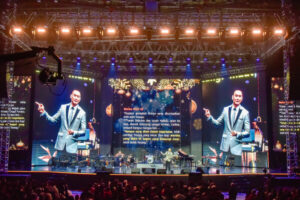
- Stage Production
- Lighting
- LED Screens
- Sound Systems
- Rigging and Truss Systems
- Decorations
- Entertainment and Talent
- Photography and Videography
- Catering
- Transportation and Accommodation
- Permits and Licenses
- Security Services
Always allocate contingency funds for unexpected expenses.
3. Select the Right Venue
The venue should align with the event’s objectives and operational requirements.
Consider:
- Guest capacity
- Accessibility
- Parking facilities
- Power availability
- Loading and unloading access
- Supporting facilities
- Emergency exits
For outdoor events, weather conditions and contingency plans should also be considered.
4. Choose Reliable Vendors and Production Partners
Working with experienced vendors significantly improves event execution.
Typical vendors may include:
- Event Production Companies
- Staging Providers
- Rigging and Truss Specialists
- Lighting Providers
- LED Display Suppliers
- Audio System Providers
- Decoration Contractors
- Documentation Teams
- Security Services
Ensure all vendors understand the project timeline and requirements.
5. Conduct a Site Survey
A site survey helps identify venue conditions before installation begins.
Areas to assess include:
- Venue dimensions
- Power distribution points
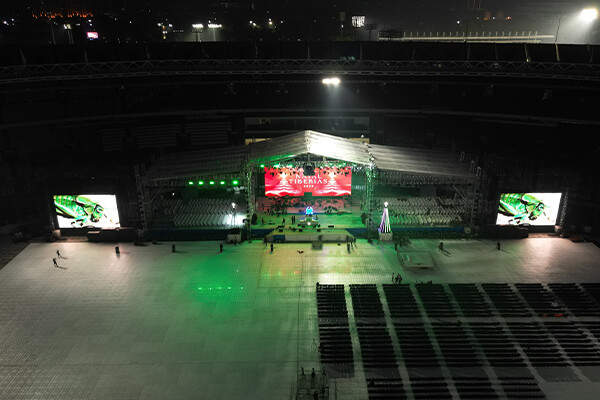
- Stage location
- Audience areas
- Logistics routes
- Rigging points
- Potential safety hazards
A proper site survey minimizes surprises during setup and event execution.
6. Develop a Detailed Event Run Sheet
The event schedule serves as the operational guide for all teams involved.
A complete run sheet should include:
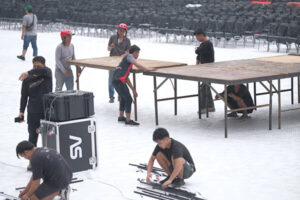
- Load-in schedule
- Installation schedule
- Rehearsals
- Guest registration
- Opening ceremony
- Main program
- Entertainment segments
- Closing session
- Load-out and dismantling
All stakeholders should work from the latest version of the schedule.
7. Prepare All Technical Production Elements
Conduct thorough checks on all technical requirements.
Technical checklist:
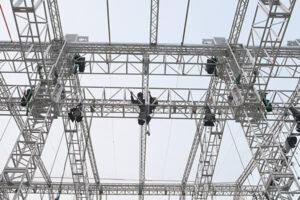
- Stage Structures
- Truss Systems
- Rigging Equipment
- Lighting Systems
- LED Displays
- Audio Systems
- Backup Generators
- Internet Connectivity
- Crew Communication Systems
All equipment should be tested before the event begins.
8. Prioritize Safety and Security
Safety should always be a top priority.
Prepare:
- Emergency evacuation routes
- Fire extinguishers
- Medical teams
- First aid stations
- Security personnel
- Crew safety briefings
Large-scale events should also consider developing a comprehensive emergency response plan.
9. Conduct Technical Meetings and Full Rehearsals
Technical Meetings ensure alignment among organizers, vendors, and production teams.
Full rehearsals help verify:
- Audio performance
- Lighting cues
- LED content playback
- Program timing
- Operational coordination
These steps often determine the overall success of the event.
10. Assign Monitoring Teams for Event Day
On event day, designate responsible personnel for each operational area.
Examples include:
- Stage Manager
- Production Manager
- Technical Coordinator
- Safety Officer
- Vendor Coordinator
Clear responsibilities allow issues to be addressed quickly and efficiently.
Conclusion
Successful events do not happen by chance. They are the result of detailed planning, strong coordination, and support from experienced production partners who understand both technical and operational requirements.
By following a structured event preparation checklist, organizers can minimize risks, improve efficiency, and deliver memorable experiences for attendees.
With more than 25 years of experience in event production, INDOPRO provides professional staging, rigging, truss systems, lighting solutions, crowd control equipment, and comprehensive technical support to help ensure every event is safe, successful, and unforgettable.